Infrastructure as a Service (IaaS): The Backbone of Cloud Computing
Introduction
In the age of cloud computing, businesses are moving away from buying and maintaining their own physical servers. Instead, they’re turning to Infrastructure as a Service (IaaS)—a powerful, flexible solution that lets you rent essential computing resources over the internet.
Whether you’re running a website, deploying an app, or managing large-scale data, IaaS gives you the infrastructure you need without the complexity and cost of owning it.
What Is Infrastructure as a Service (IaaS)?
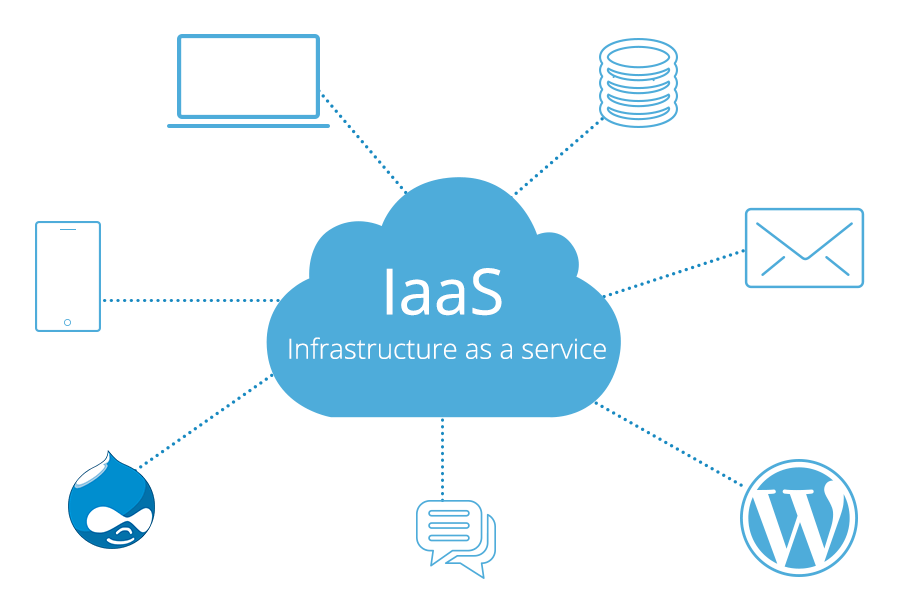
IaaS is a cloud computing model where a third-party provider delivers virtualized computing resources—like servers, storage, networking, and operating systems—on demand via the internet.
You pay for what you use, scale resources as needed, and only manage the software stack—while the provider handles the underlying hardware and virtualization layer.
How IaaS Works
Here’s a breakdown of how IaaS functions:
- You choose a cloud provider (like AWS, Azure, or Google Cloud).
- You provision resources (such as virtual machines, storage volumes, and load balancers).
- You install and manage your applications on those virtual resources.
- The provider takes care of the infrastructure: data centers, hardware maintenance, security, uptime, and scaling.
Key Features of IaaS
- 🖥️ Virtual Machines (VMs): Spin up virtual servers in minutes.
- 💾 Scalable Storage: Store massive amounts of data with automatic scaling.
- 🌐 Network Management: Configure virtual private networks, firewalls, and load balancers.
- 📊 Usage-Based Billing: Only pay for what you use—per minute, hour, or gigabyte.
- 🔐 Security & Compliance Tools: Built-in features to secure your environment.
Benefits of IaaS
✅ Cost Savings
No need for physical servers, racks, power, cooling, or IT staff for hardware.
✅ Scalability
Instantly add or reduce computing resources as your business grows or shrinks.
✅ Speed & Flexibility
Deploy new environments in minutes, not weeks.
✅ Disaster Recovery
Most IaaS providers offer built-in backup, recovery, and failover options.
✅ Focus on Innovation
Spend less time on infrastructure and more time building applications or delivering services.
Common Use Cases
- 🛠️ App Development & Testing: Easily spin up environments for testing without buying hardware.
- 🌐 Website Hosting: Host high-traffic websites with scalable backend support.
- 🧠 Big Data & Analytics: Process and store large datasets on-demand.
- 🧱 Disaster Recovery & Backup: Replicate systems across regions for resilience.
- 🕹️ Gaming & Streaming: Deliver content at scale with low-latency compute power.
Top IaaS Providers
- Amazon Web Services (AWS EC2)
- Microsoft Azure (Azure Virtual Machines)
- Google Cloud Platform (Compute Engine)
- IBM Cloud
- Oracle Cloud Infrastructure
Each platform offers unique pricing models, regional availability, integrations, and additional services (like databases, AI tools, etc.).
IaaS vs Other Cloud Models
| Feature | IaaS | PaaS | SaaS |
|---|---|---|---|
| User Controls | OS, runtime, apps | Apps only | Just use the software |
| Provider Manages | Hardware, virtualization | OS + infrastructure | Everything |
| Examples | AWS EC2 | Heroku, Google App Engine | Gmail, Dropbox |
Challenges of IaaS
- 🔧 Configuration Complexity: You manage software, updates, and security patches.
- 🔒 Security Responsibilities: While providers secure the hardware, you must secure your apps and data.
- 🔗 Vendor Lock-In: Moving to another provider may require time and money.
- 🧠 Learning Curve: Requires basic knowledge of networking, OS, and cloud management.
Conclusion
Infrastructure as a Service (IaaS) is transforming how businesses think about IT. It removes the burden of managing hardware, offers unmatched scalability, and empowers teams to build and deploy faster than ever.
Whether you’re a startup launching a product or an enterprise modernizing legacy systems, IaaS offers the agility, control, and cost-efficiency needed in today’s digital world.